TINWING

Composite Curing Autoclaves

We specialize in building stable, reliable autoclaves for composite manufacturing. Over the past 15 years, we have delivered more than 100 installations, supporting operations from research laboratories to aerospace which gives us a practical understanding of composite curing requirements.

Built Around Your Composite Parts

Tinwing designs and manufactures custom composite curing autoclaves. During composite curing, consistent control of temperature, pressure, and vacuum is essential for laminate quality and repeatability.

In our composite curing autoclaves, recirculating hot air heats the bagged layup and tooling, while vessel pressure and bag-side vacuum support laminate consolidation. Programmed heating, holding, and cooling stages follow your specified cure cycle. Our standard design scope includes:

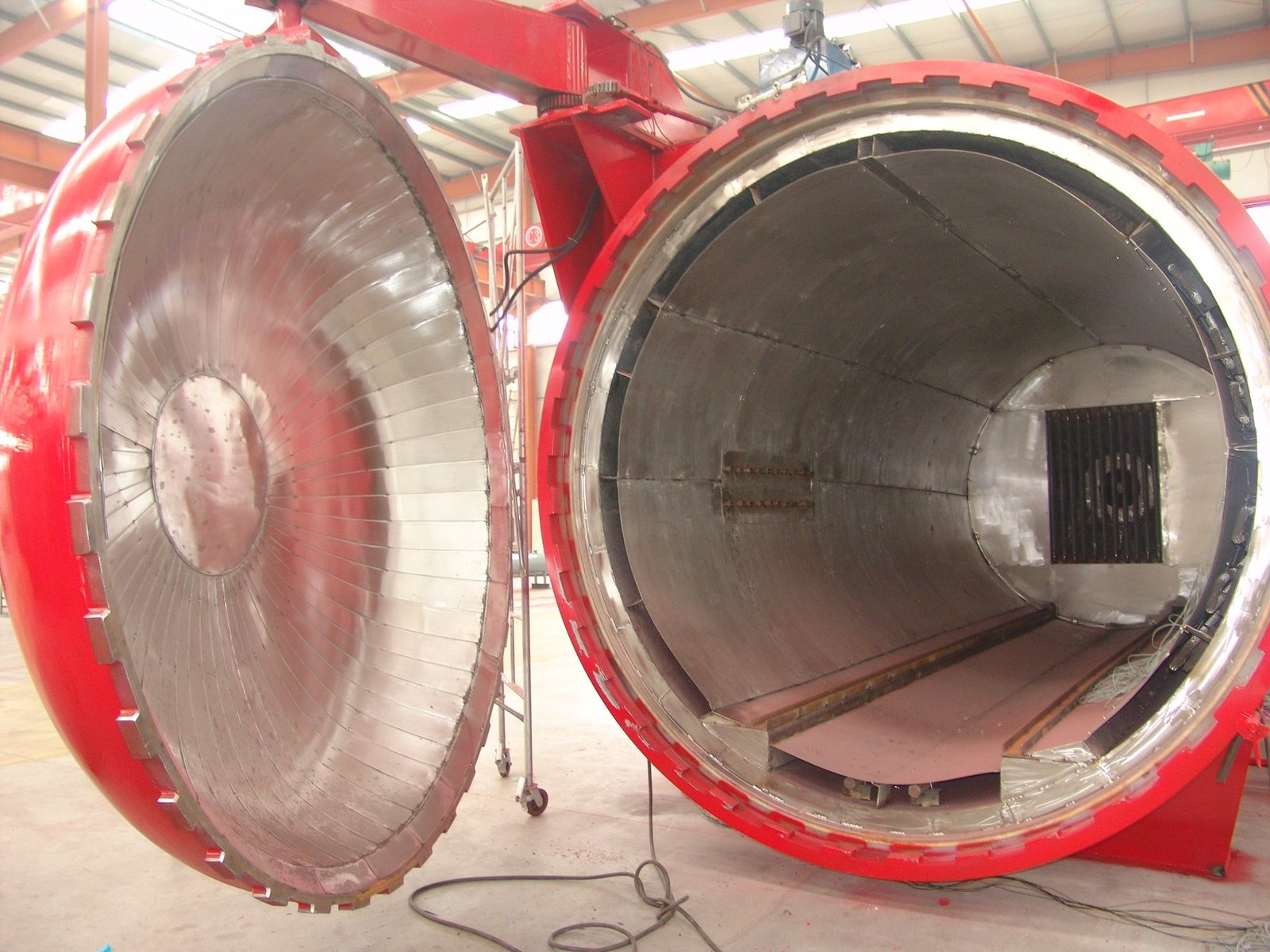
Vessel & working space Effective working diameter, usable length, internal insulation, and air ducting are configured around your part envelope, tooling, and loading clearances.
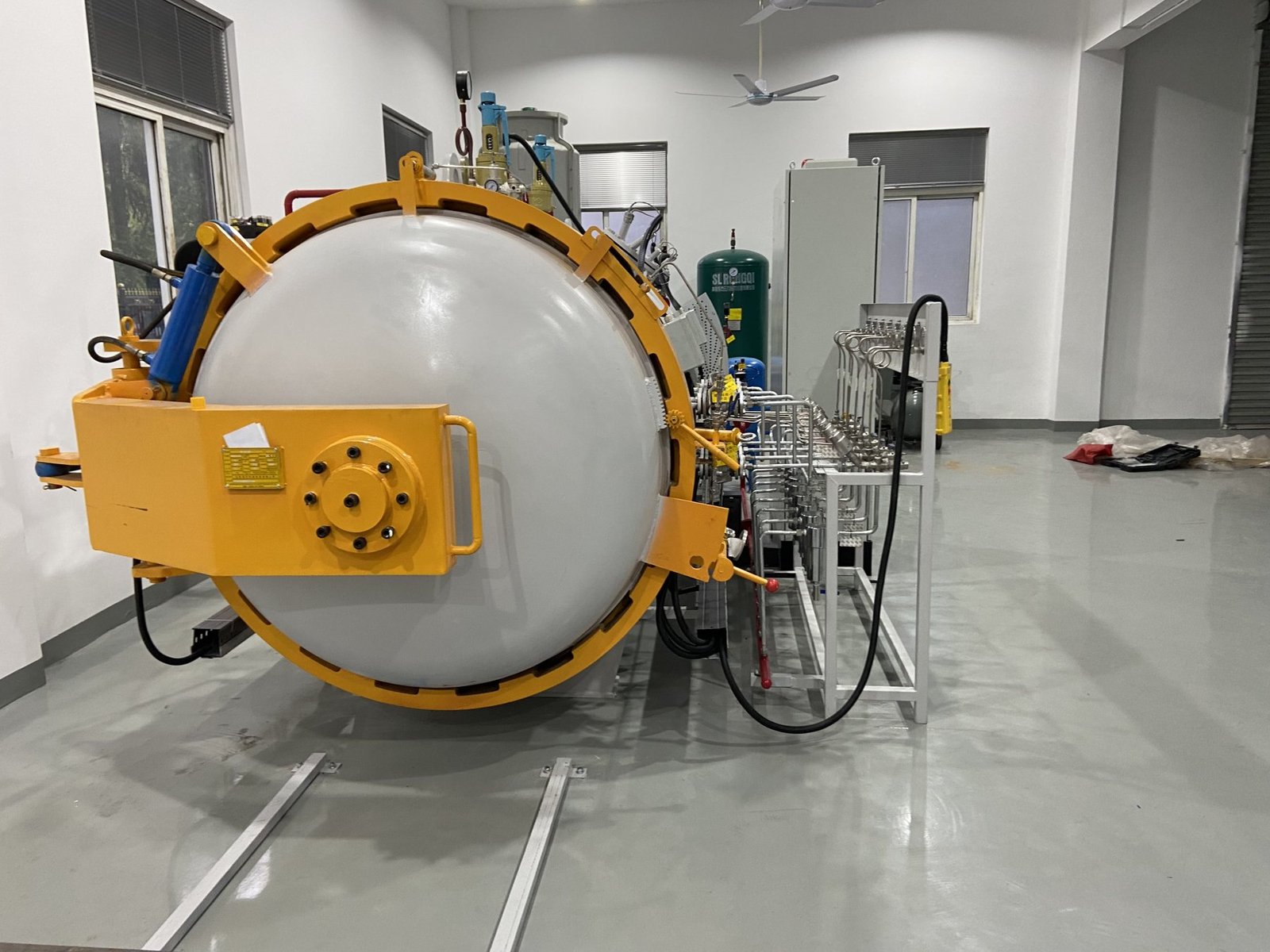
Door & material handling Quick-opening door mechanisms, internal rails, loading trolleys, and manual or powered transfer systems are specified to match your batch weight and loading workflow.
Factory integration Door swing clearance, maintenance access, control-cabinet placement, and air, water, and electrical utility connections are coordinated with your plant layout.

View the configuration scope →

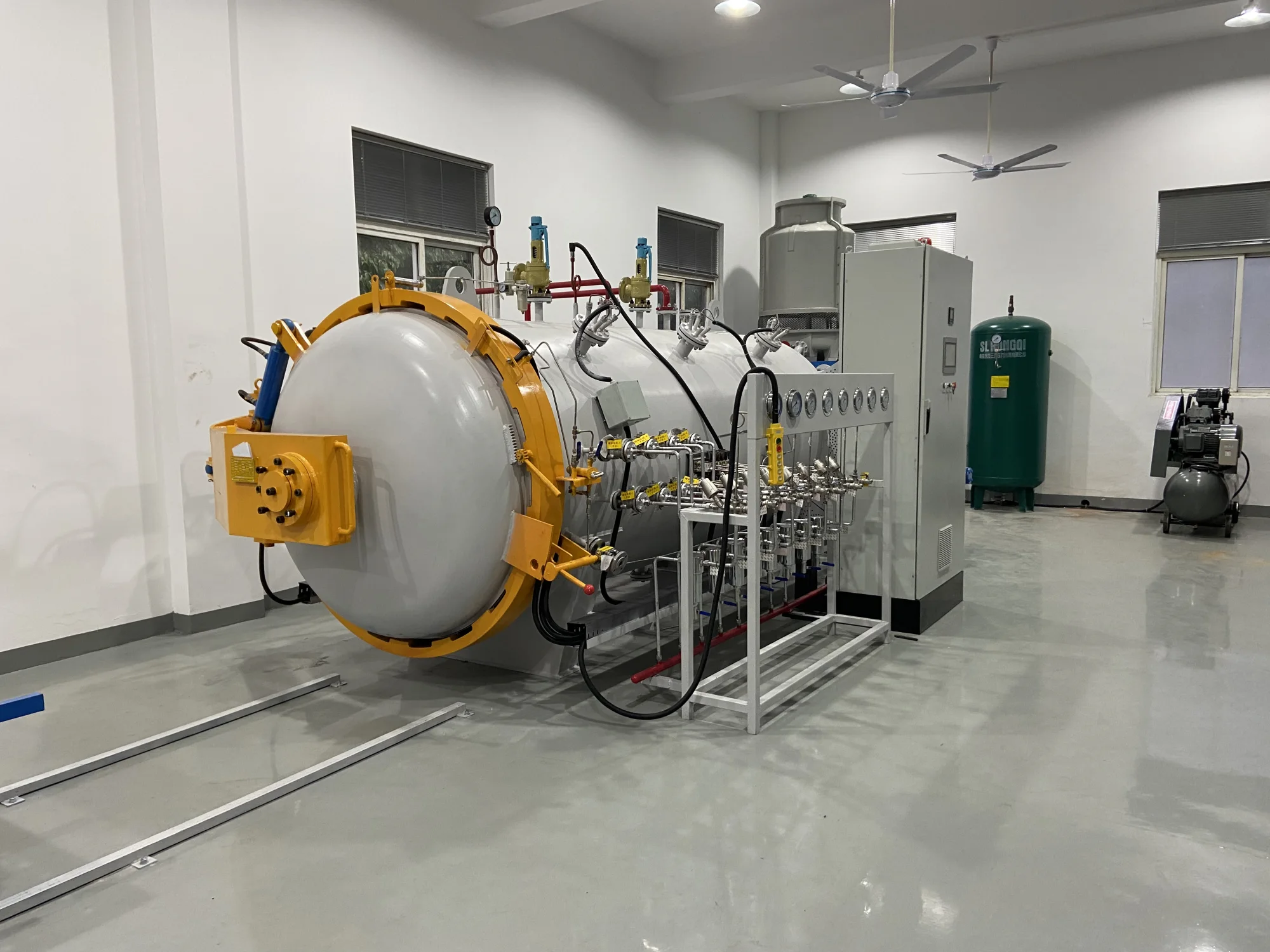
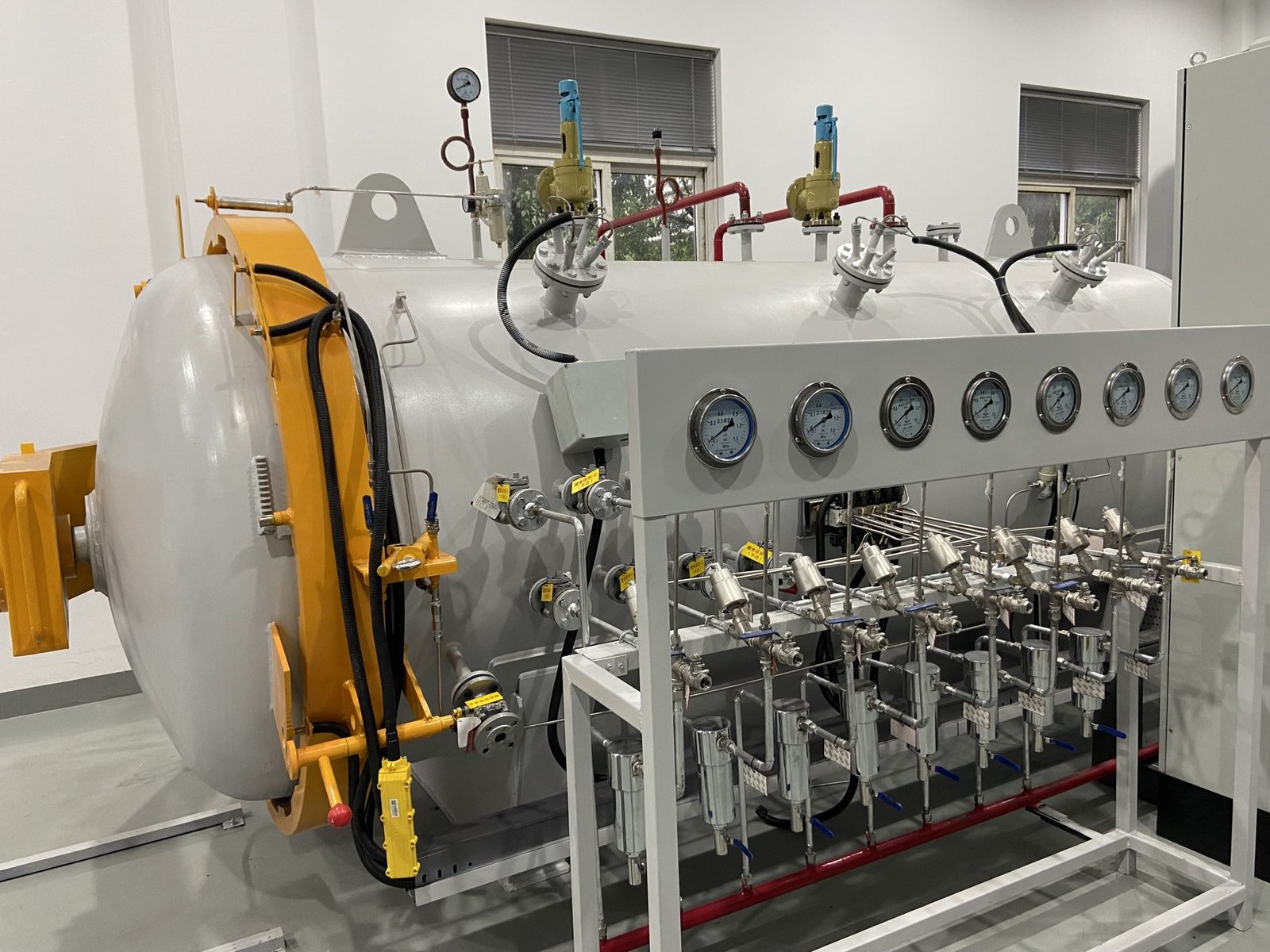
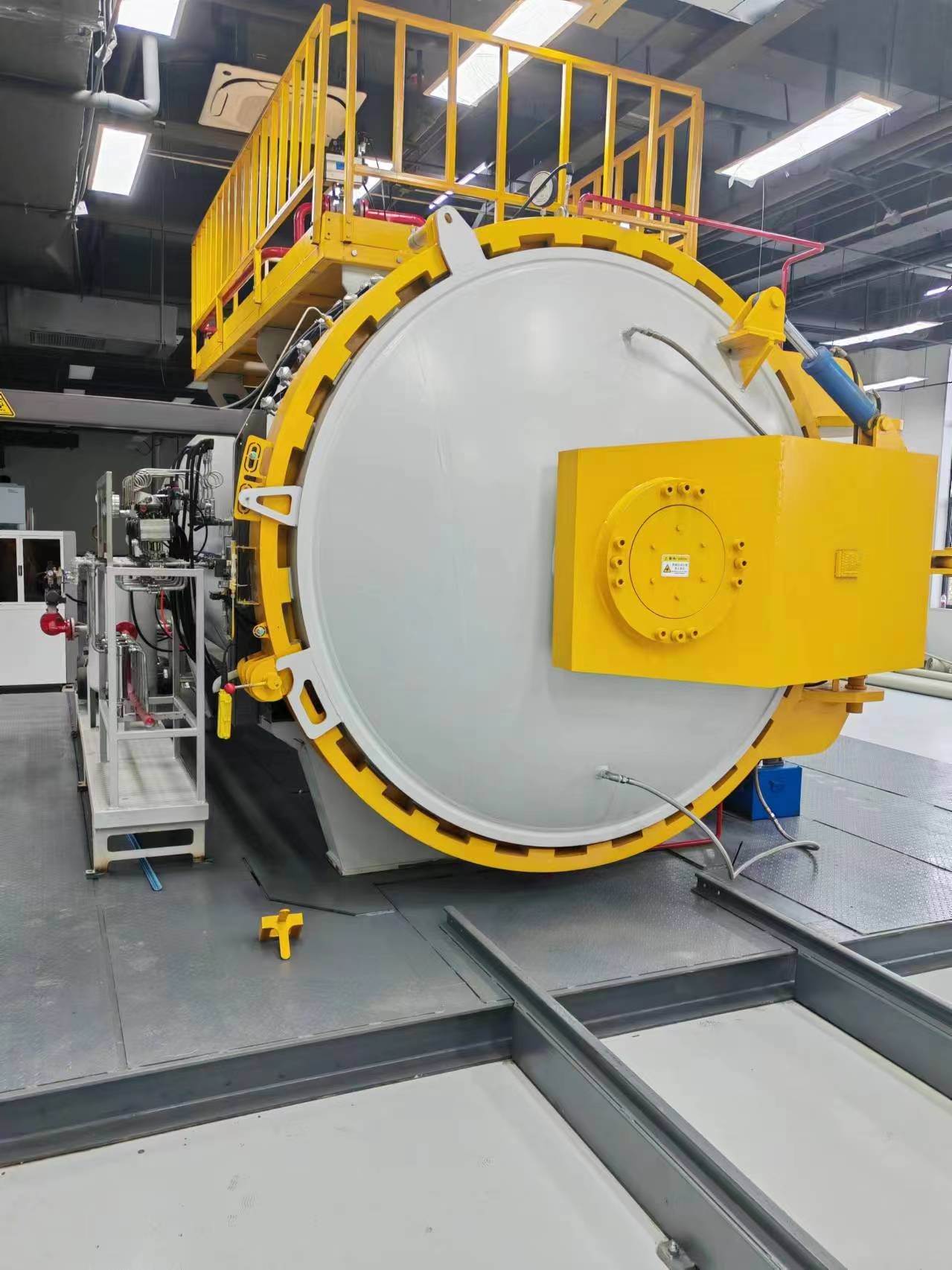
White autoclave with a yellow quick-opening door, loading rails and a top access platform in the workshop Autoclave assembly in the workshop. Equipment dimensions and system layout vary by project.

An Integrated Curing System

Heating, pressure, cooling and vacuum are coordinated through the autoclave control system.

Heating & Air Circulation

Stainless-steel electric heaters and a pressure-sealed circulation fan move heated air through the internal ducting. Variable-speed fan control and modular heater assemblies support process adjustment and maintenance access.

Heater power, air circulation and temperature-measurement points are selected for the working zone, tooling and thermal load.

Controlled Cooling

The cooling arrangement combines pre-cooling and a main cooling stage with an internal heat exchanger. External water circulation can include a tank, pump and chiller, as defined in the equipment scope.

Cooling capacity is specified against the cure cycle, process load and available site-water conditions.

Pressure Regulation

Controlled inlet and exhaust valves regulate vessel pressure through the programmed cycle. The system incorporates pressure measurement, a filtered and regulated control-air supply, and an exhaust silencer.

The process-gas supply and its connection to the autoclave are defined for each installation.

Vacuum System

A vacuum pump, buffer vessel, valves, gauges and pressure transmitters form the bag-side vacuum system. Vacuum status is collected by the PLC and displayed at the operator interface.

Bag connections, monitoring channels and fault-isolation requirements are configured for the tooling and batch arrangement.

Controls Safety

Recipe control and cycle records, supported by door, heating and pressure protections.

Control & Cycle Records

PLC, touchscreen & supervisory PC

Local PLC and touchscreen operation can be combined with a supervisory computer, with switching between computer and local operation.

Coordinated cure recipes

Temperature, pressure, vacuum and stage times are set and monitored through the control system, covering heating, holding, cooling and pressure changes.

Recorded process data

Setpoints, live values and stage times can be recorded, with curve display, stored history and print functions. Reporting formats and channel counts are defined for the project.

Door, Heating & Pressure Protection

Interlocked quick-opening door

The hydraulic door arrangement uses an inflatable seal. Mechanical and electrical interlocks monitor closing, locking and sealing before pressurization; zero-pressure checks form part of the opening safeguards.

Independent temperature protection

Temperature control, overtemperature protection and workpiece measurement use separate functions. Circulation and heating are interlocked, with overtemperature and overpressure alarms.

Pressure relief & vacuum alarms

Safety relief devices and manual pressure-release provisions are incorporated into the system. Vacuum protection includes fault alarms and isolation of the affected circuit.

Custom Configuration for Your Autoclave

Every custom autoclave is engineered around its parts and plant, down to the controls layout and the paint.

Construction & Equipment Scope

Pressure vessel Carbon-steel pressure vessel construction with internal insulation, air ducting, and load-support rails.
Door assembly Hydraulic quick-opening door with an inflatable seal. Door swing direction and loading arrangement are configured for the site.
Thermal system Electric heating, forced-air circulation, and an internal cooling heat exchanger.
Vacuum & controls Vacuum pump and buffer vessel, bag-side measurement channels, PLC/touchscreen control, and optional supervisory PC.

Performance Defined for the Load

Temperature uniformity, heating and cooling rates, and effective working dimensions are specified together with your tooling, batch load, and acceptance test conditions. Operating pressure, design pressure, and vacuum requirements are recorded separately.

Clear door opening, rail and trolley load rating, plant utilities, applicable vessel codes, and inspection scope are confirmed during engineering review.

Request a technical proposal →
Specifications for Your Autoclave

The following project parameters are defined during engineering review.

Effective working zone: Usable working diameter and length, specified separately from nominal shell diameter. Temperature and pressure rating: Operating and design temperature, operating and design pressure, and gauge or absolute pressure basis. Temperature uniformity: Working-zone uniformity target, sensor placement, and empty or loaded test conditions. Heating and cooling rates: Defined against part and tooling mass, temperature range, and vessel pressure. Bag-side vacuum: Working vacuum level, leak-rate test criteria, and the number of pull and monitoring ports. Workpiece thermocouples: Number of part thermocouple channels and sensor type, specified separately from control and overtemperature protection channels. Loading and transfer: Rated rail and trolley load capacity, loading height, and manual or powered transfer arrangement. Site utilities: Power supply (voltage and frequency), total installed power, cooling water, compressed air or gas supply, and floor layout. Codes and inspection: Applicable pressure vessel codes, nondestructive testing scope, and required project documentation.

Documentation and Support

Engineering drawings, equipment records and operating support are defined with the supply scope.

Engineering Drawings

General arrangement, system layout, foundation load requirements, and wear-parts drawings support installation planning and routine maintenance.

Equipment Records

The agreed documentation package covers vessel inspection records, material certificates, weld examination and pressure-test reports, and instrument documentation. Applicable vessel codes and third-party inspection requirements are confirmed per destination and project.

Commissioning and Training

Installation guidance, on-site commissioning, and operator training are arranged according to the supply agreement, accompanied by operating, maintenance, and control-system manuals.

Discuss Your Custom Autoclave

Share your part and tooling dimensions, material cure cycle, batch weight, and site utility conditions. Our engineering team will review your requirements and prepare a tailored equipment configuration and quotation.

Scroll to Top