Chamber Dimensions & Layout
Chamber length, width and height are developed around the parts, tools and racks. Airflow clearances, the equipment footprint and the position of the control cabinet are considered in the overall layout.

☰ Menu
Vacuum Pressure Impregnation Furnaces
TINWING primarily designs and manufactures custom curing ovens. The chamber, loading arrangement, heating and controls are developed around the size and thermal requirements of the parts and tooling, together with the available production space.
An insulated chamber and recirculating hot air provide the basis for resin curing, component heating and drying. For composite curing, the resin specification, tooling and any vacuum-bag connections define the process configuration.
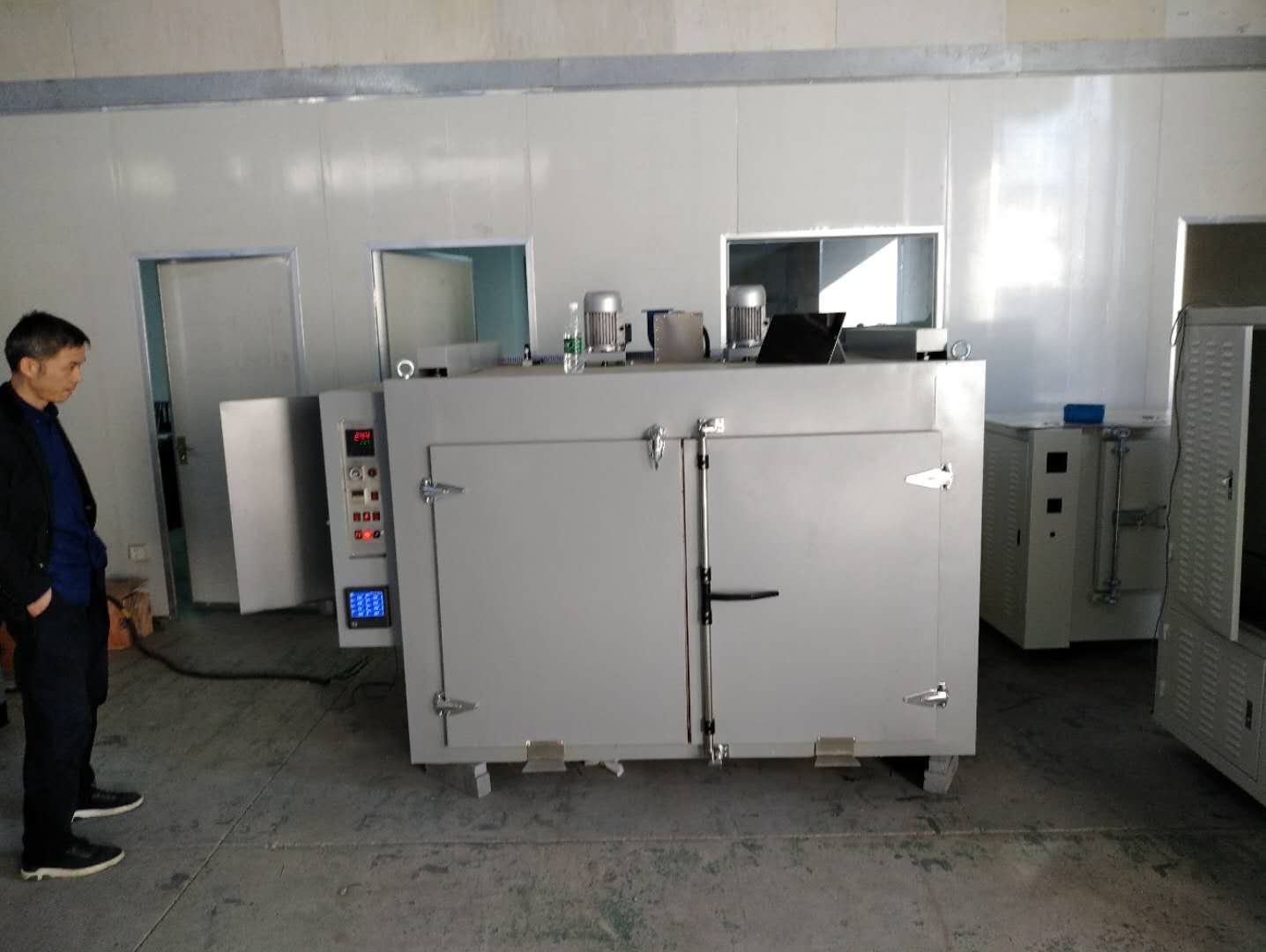 Double-door curing oven with a side-mounted control cabinet.
Chamber construction and process systems are configured together for each oven project.
Chamber length, width and height are developed around the parts, tools and racks. Airflow clearances, the equipment footprint and the position of the control cabinet are considered in the overall layout.
Double swing-door and top-opening designs provide different access arrangements. Forklift-loaded racks and rail-guided trolleys can be specified to suit the load, handling method and available opening space.
Electric heater power, circulation fans and supply/return ducting are selected for the chamber and thermal load. Gas heating can be developed as a separate configuration, with its own heating and control scope.
Stainless-steel liners, outer cladding, structural frames and insulation are specified for the operating temperature and chamber construction. Material grades, thicknesses and insulation type are defined in the project design.
Temperature settings, heating ramps, holding stages and measurement points are configured around the required cycle. Chamber-control sensors and any workpiece thermocouples are specified separately.
A vacuum pump and piping can be incorporated for compatible bagged processes. Vacuum connections, electrical supply, exhaust outlets and loading interfaces are defined as part of the oven configuration.
Workshop photographs showing chamber access, enclosure construction, interior details and control arrangements.
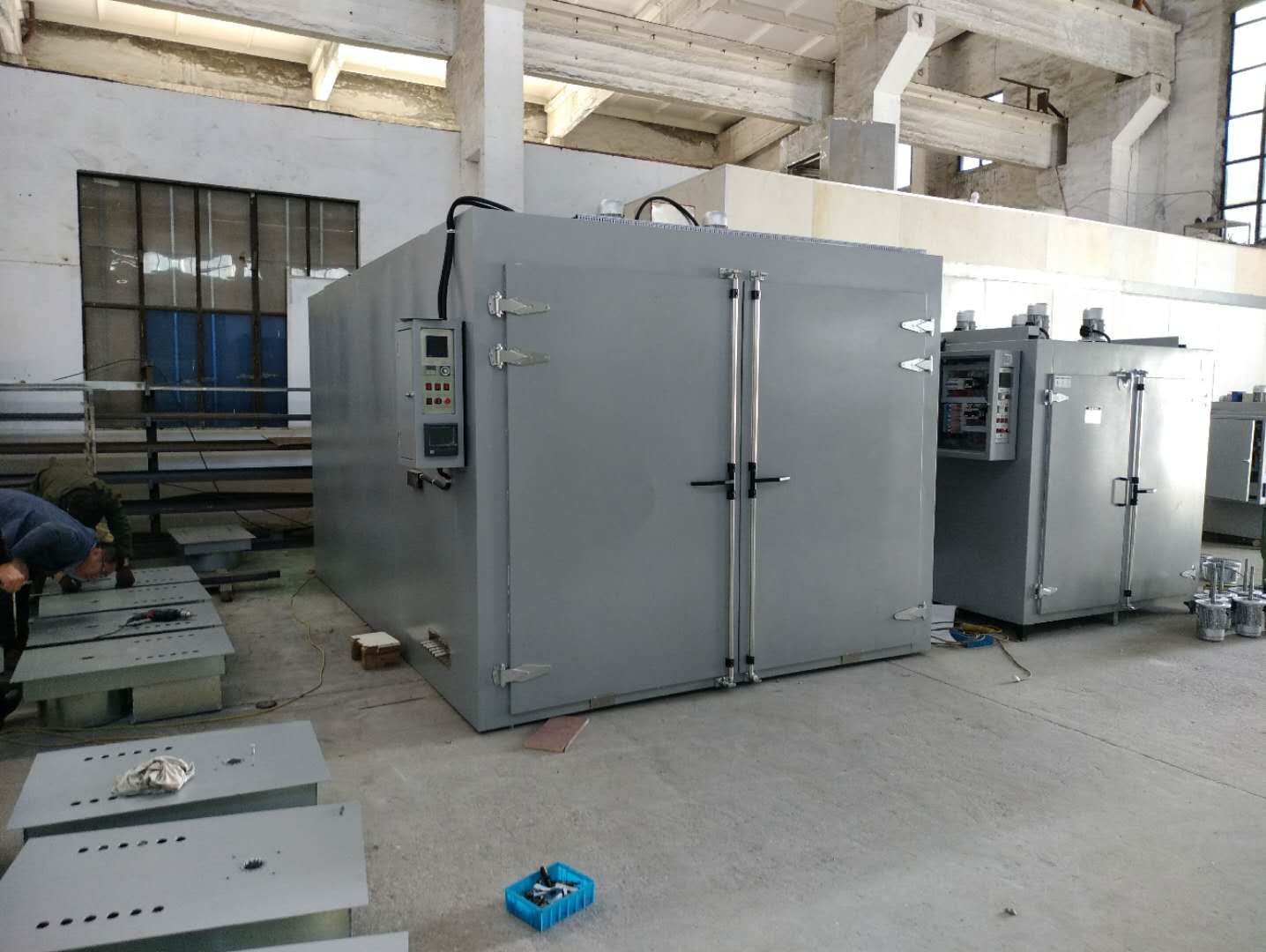
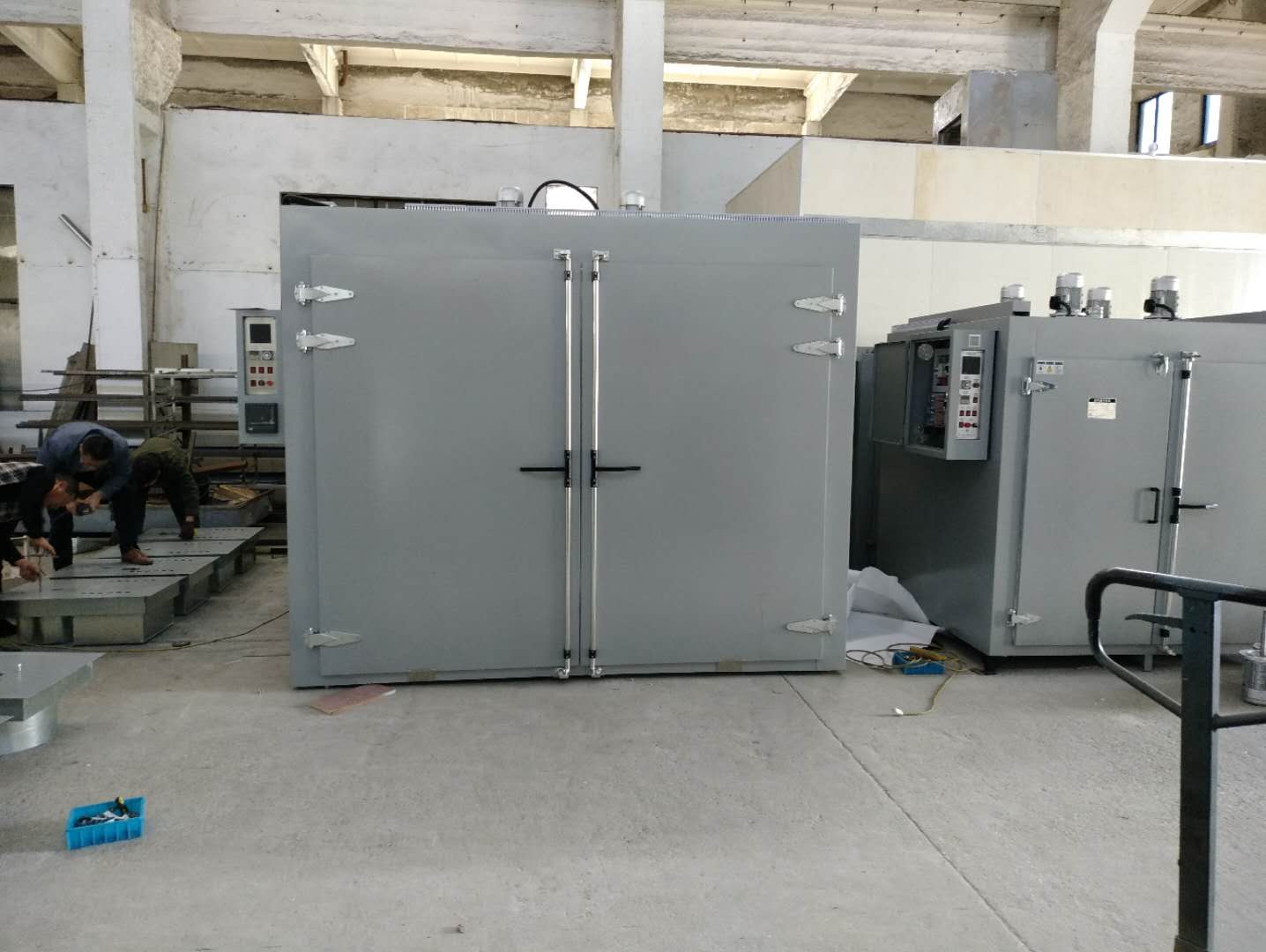
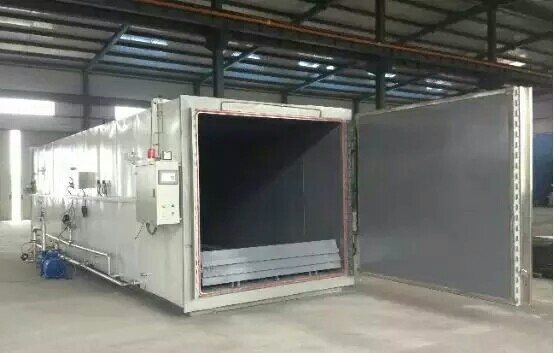


Workshop views illustrate equipment construction. The standard product examples below have their own specifications.
PLC and touchscreen operation, with measurement and recording requirements defined for the project.
PLC and touchscreen controls provide process settings, cycle operation, temperature display and alarm functions. Controller hardware, operator interface and program requirements are selected with the equipment configuration.
Control and monitoring channels are configured for the chamber and process. Temperature-history recording and USB export are available in the XGH examples below. Workpiece channels, vacuum monitoring and additional reporting requirements are specified for each custom project.
The control design incorporates circulation-before-heating interlocks, overtemperature alarms and heater-power cutoff. Phase and circuit protections are specified with the fans, heaters and electrical installation.
Each custom oven has its own technical specification, covering the working space, thermal cycle, load and process connections.
Working temperature, heating and cooling requirements, temperature uniformity and measurement channels are defined for the intended load. The working zone, tooling arrangement and test conditions form part of the technical specification.
The proposal sets out the chamber and loading system, heating and circulation equipment, controls, vacuum connections and site utilities. Electrical diagrams, operating documentation, commissioning and spare-parts requirements are agreed with the supply scope.
We specify the vacuum connections, part temperature measurement, cooling and electrical supply for your cure process.
These two XGH standard product examples show alternative chamber orientations and loading arrangements. Custom ovens receive project-specific dimensions, performance requirements and equipment specifications.
Scroll horizontally to compare both layouts.
*Design test basis: atmospheric pressure, no process load, with the trolley included for uniformity testing. The measurement zone and survey method are defined in the project technical agreement. Actual ramp performance depends on the workpiece, tooling and load. Listed values describe these two standard product examples. Custom-project values are confirmed in the technical specification.
Download the two XGH standard product examples as configuration references. For a custom oven, request a technical proposal covering the required working space, thermal performance and equipment scope.
Download standard examples ↓Operating and instrument manuals, electrical diagrams, equipment documentation and spare parts are included in the agreed project scope. The XGH examples list heating elements, fuses and a temperature sensor as initial spares.
Composite material suitability, vacuum-bag interfaces and any required production qualification are reviewed for the specific process.
Share your parts, tooling, cure cycle and factory layout so we can develop the equipment configuration.