
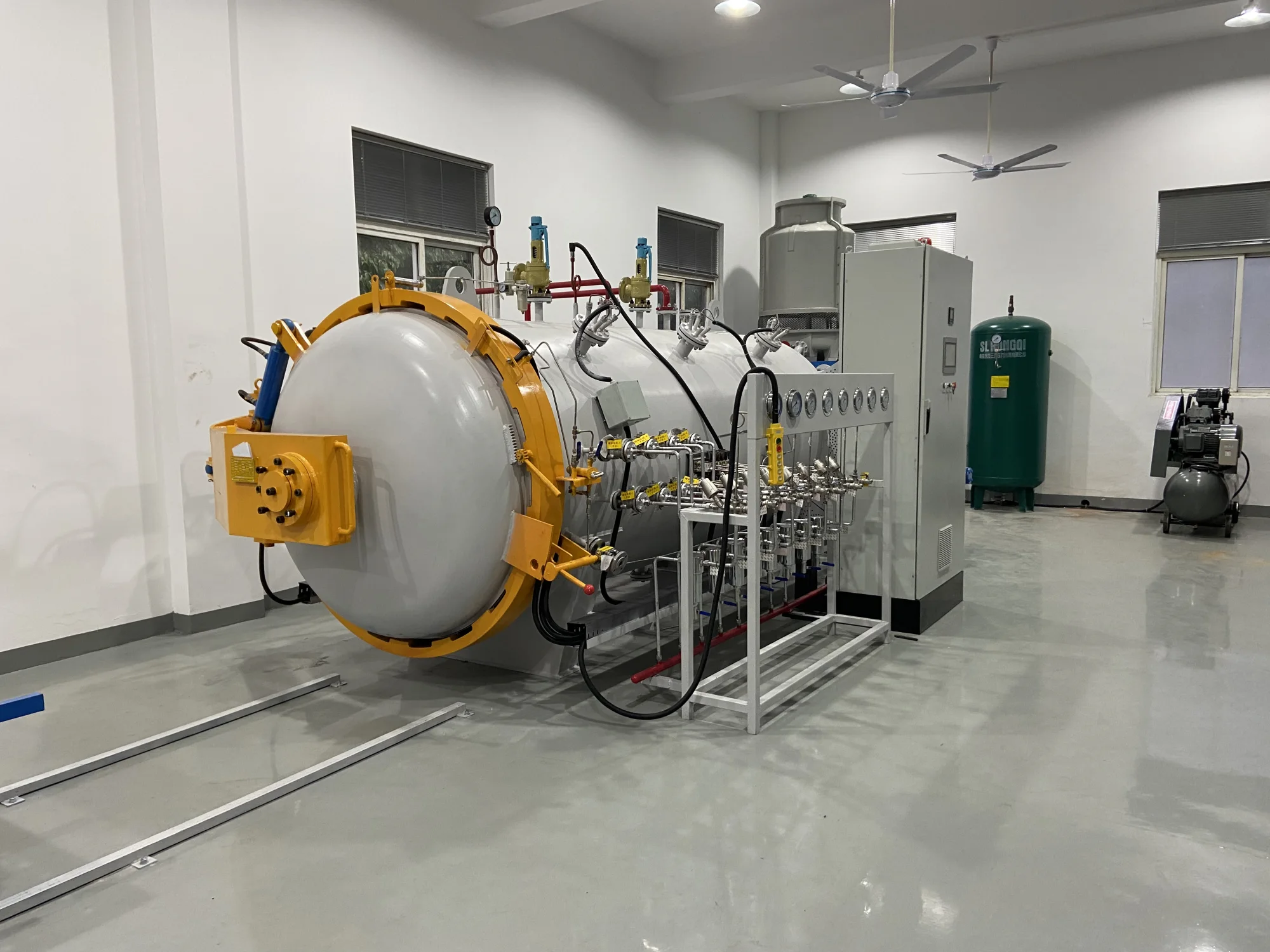
An industrial autoclave should not be specified by vessel diameter and working pressure alone. The correct configuration begins with the material, part, tooling, production cycle, and site conditions. When these inputs are clear, the vessel, thermal system, vacuum arrangement, controls, and loading method can be reviewed as one complete process system.
1. Start With the Process Duty
Define what the autoclave must do to the material. Composite curing, rubber vulcanization, and vacuum pressure impregnation use enclosed pressure vessels, but their process sequences are different. A useful first description includes the material, the physical change required, the process medium, and the expected cycle.
For composite curing, this normally means the resin system, cure temperature, pressure profile, vacuum-bag arrangement, and part construction. For rubber, it means the compound, product geometry, curing medium, temperature, pressure, and dwell time. For impregnation, it means the porous material, treatment liquid, vacuum level, pressure stage, and liquid compatibility.
2. Define the Usable Working Envelope
The largest part is not the same as the required internal vessel size. Tooling, racks, trolleys, vacuum connections, circulation clearance, and loading access all occupy space. Provide the maximum part dimensions together with the tool or support frame and the intended batch arrangement.
Effective length should be based on the usable process zone rather than the total shell length. Internal diameter should include sufficient clearance for loading and airflow. The door opening and floor arrangement must also suit the handling method.
3. Establish Temperature, Pressure, and Vacuum Requirements
Separate normal operating conditions from maximum design conditions. The equipment supplier needs the target cycle, expected ramp rates, allowable temperature variation, working pressure, vacuum requirements, and any cooling target. These values influence vessel design, heating capacity, circulation, insulation, valves, instrumentation, and safety systems.
If several products will use the same autoclave, identify the full operating range and the most demanding cycle. Avoid selecting a higher temperature or pressure without a process reason: unnecessary design margins can increase equipment cost, energy use, and complexity.
4. Describe Heating, Cooling, and Airflow
Temperature uniformity depends on more than heater power. The circulation path, fan arrangement, load density, tooling, and available clearance all affect heat transfer. Tell the supplier how the parts are arranged and whether the load blocks airflow.
Also provide the heating energy available at the site and the required cooling method. Electrical heating, thermal oil, steam, water cooling, and air cooling each create different utility and control requirements.
5. Define Controls and Production Records
Clarify how operators should create recipes, start cycles, monitor alarms, and retrieve process records. Specify the number of part and air temperature channels, vacuum monitoring points, pressure recording needs, user access levels, and required export format.
If the equipment will connect to a factory network or production system, identify the communication and data expectations early. Control architecture is easier to define before fabrication than after installation.
6. Include Loading, Door, and Site Conditions
The loading method affects vessel height, rail alignment, trolley design, door clearance, and operator access. Provide the available installation area, building height, floor condition, crane or forklift access, and preferred loading direction.
Utilities should include voltage and frequency, compressed air, cooling water, drainage, ventilation, and any limits on connected power. Destination country and required design code or inspection documentation must also be stated before engineering review.
Information to Prepare Before Requesting a Quote
- Material and product being processed
- Maximum part, tooling, and batch dimensions
- Target temperature, pressure, vacuum, and cycle profile
- Required heating and cooling performance
- Loading method and door-access requirements
- Control, recording, and recipe-management expectations
- Available electrical power and site utilities
- Destination, applicable code, and documentation requirements
A Better Specification Produces a Better Technical Discussion
A complete request does not need to prescribe every component. It should explain the production problem clearly enough for the equipment configuration to be reviewed. The supplier can then discuss vessel geometry, thermal capacity, vacuum circuits, controls, safety, and project documentation against the real process duty.